The Coffee We Grow: Bringing Roasting to Byramudi
There is a curious gap between growing coffee and drinking it.
At Byramudi Plantations in Sakleshpur, coffee begins its life with us. We cultivate Arabica and Robusta beneath the shade of the Western Ghats, follow the crop through flowering and fruit development, and then move into harvest, when months of work come together over a matter of weeks. The cherries are picked, processed, dried and prepared as green coffee, ready for the next stage of their journey.
For years, we have worked with roasters to bring Byramudi Coffee to the people who drink it. We have always tasted and evaluated our coffees along the way, but roasting has remained a separate part of the process. This is common in coffee, where producers generally sell coffee as green beans and roasting takes place further along the supply chain. For us, it has also meant that one important part of the coffee's transformation has happened outside the estate.
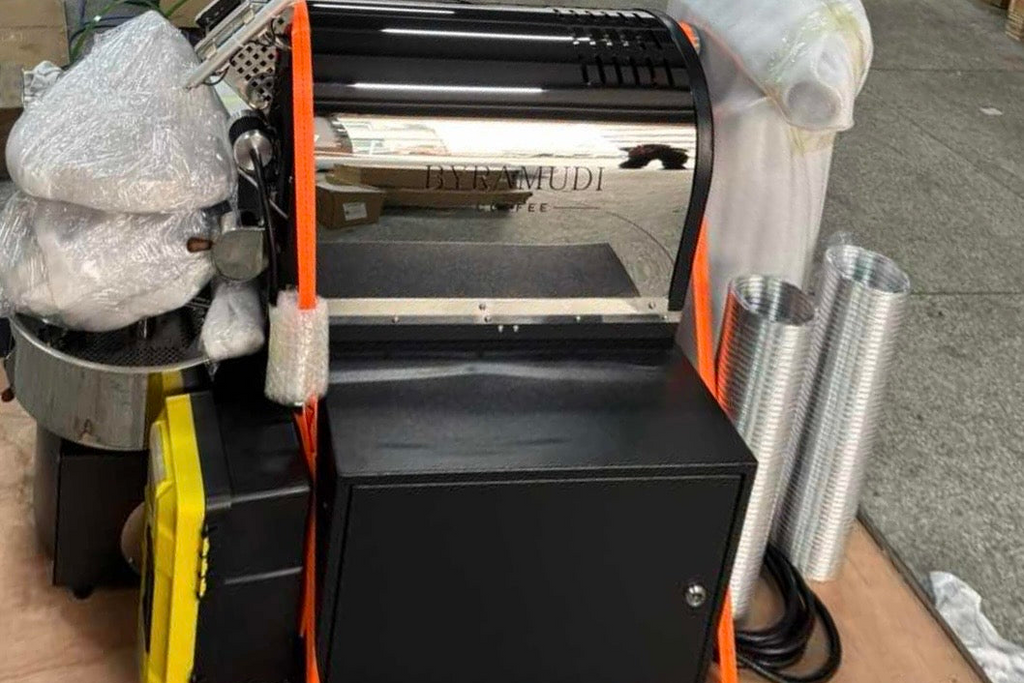
Our first coffee roaster is now on its way to Byramudi.
Bringing roasting to the estate will give us the opportunity to follow our coffees a little further and understand what happens between the green bean and the brewed coffee in a much more direct way.
What roasting actually does to coffee
Green coffee bears little resemblance to the coffee most of us recognise. The beans are firm and pale, with an aroma very different from freshly roasted coffee. Much of the character we associate with coffee develops during roasting, as heat removes moisture, changes the structure of the bean and drives a series of chemical reactions that create and transform the compounds responsible for its aroma and flavour.
By the time coffee reaches the roaster, it already carries the effects of its variety, growing conditions, maturity at harvest and processing. Roasting then determines how those characteristics develop in the finished cup. Heat, time and airflow influence the progression of the roast, affecting qualities such as sweetness, acidity, bitterness, body and aroma.
A washed Arabica from one harvest may respond very differently from a naturally processed Robusta, even when both are roasted on the same machine. There is no single approach that works equally well for every coffee.
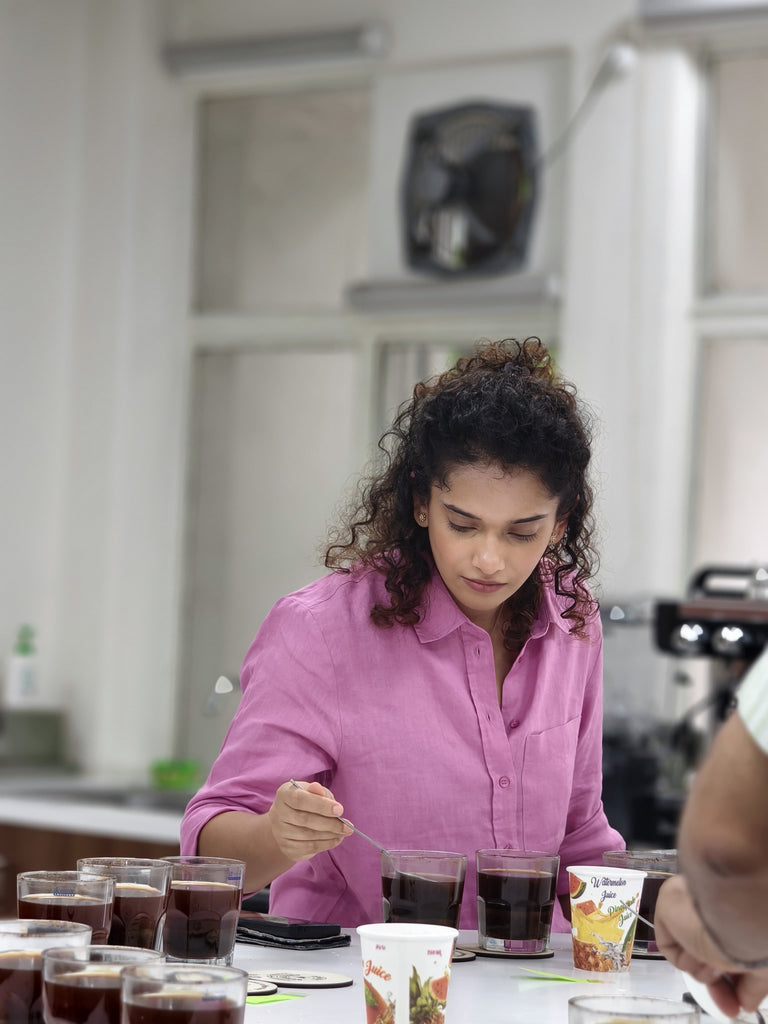
Until now, we have understood this part of our coffees largely through the work of roasters we have collaborated with. Having our own roaster will allow us to explore that relationship directly. We will be able to take small quantities from individual lots, try different roast profiles, compare the results and cup them ourselves.
Bringing the stages closer together
Coffee is often divided into distinct stages: cultivation, processing, roasting and brewing. In reality, the stages are closely connected. Growing conditions influence the plant and its fruit. Harvesting determines which cherries enter processing. Processing and drying shape the green coffee. Roasting then transforms those beans into the coffee that will eventually be brewed.
Being able to roast at Byramudi will let us look at those connections more closely. If two lots have been processed differently, we can explore how they respond to roasting. If a particular characteristic stands out in the green coffee, we can see how it develops under heat. Working with small quantities will also allow us to compare coffees and roast approaches without committing an entire production lot to a single profile.
This gives us another way to understand the work that happens at the plantation. The decisions made during cultivation and processing become part of what the roaster has to work with. Roasting gives us another point from which to evaluate those decisions and, over time, build a better understanding of our coffees.
This year's coffee gives us plenty to explore
The timing is particularly interesting because this is already a season of experimentation at Byramudi.
Arabica picking has begun, bringing the first coffees of the new harvest through the estate. Alongside our regular production, we are also working with a small yeast-fermented Arabica microlot.
Fermentation is an established part of coffee processing. In many methods, naturally occurring microorganisms break down the sugars and mucilage surrounding the coffee seed. More controlled approaches have also become an area of experimentation, including the use of selected yeasts to influence the conditions under which fermentation takes place.
Yeast consumes available sugars and produces compounds including organic acids and alcohols as it grows. These changes can affect the chemical environment around the coffee and, in turn, influence compounds that contribute to its sensory characteristics. The outcome depends on factors including the yeast, temperature, time, oxygen and the coffee itself, which is why controlled fermentation requires careful observation and consistency.
Our microlot is deliberately small. We want to see what this particular approach does to the coffee and evaluate the result once it has been processed and dried. The arrival of our roaster will allow us to continue that investigation, looking at how this particular green coffee responds to different approaches in the roasting room.
That is where the different parts of the process become particularly interesting. A coffee shaped by its variety, growing conditions and fermentation will then have another set of variables introduced through roasting. We will be able to taste the result and begin to understand how those stages interact.
A new part of the coffee journey
Bringing a roaster to Byramudi does not change what the plantation has always been about. The coffee will still begin with the plants, the land and the people who care for them. Cultivation, harvesting and processing remain at the heart of what we do.
What changes is how far we can follow the coffee.
For years, we have grown our coffee and worked with roasters to bring it to you. Soon, we will be able to roast some of those coffees ourselves, on the same estate where they were grown. It gives us another skill to develop, another set of variables to understand and another way to evaluate the results of the work that happens here throughout the year.
We expect there will be a learning curve. Roasting is a discipline of its own, and knowing how a coffee will behave requires more than knowing its origin or processing method. We will have to learn how our Arabica and Robusta coffees respond to heat, how different roast profiles affect them and which approaches allow their characteristics to come through most clearly.
The first roasts will be part of that learning. We will roast, cup, make adjustments and try again. Some results will be immediately useful; others may raise more questions than they answer. Either way, each roast will give us another piece of information about the coffee we grow.
For a family that has spent decades growing coffee, that is what makes this next step exciting. We are not changing what Byramudi has always done. We are following the coffee a little further than we have before.
Related post
04
Aug
27
Jul