Vermicomposting: Giving Back to the Soil
This is part of our "From the Estate" series, the everyday work behind the harvest that doesn't always make it onto the label. Here's a closer look at one part of it: our vermicompost pits.
Coffee farming isn't just about harvest. Some of the most important work happens long before the coffee cherries begin to ripen.
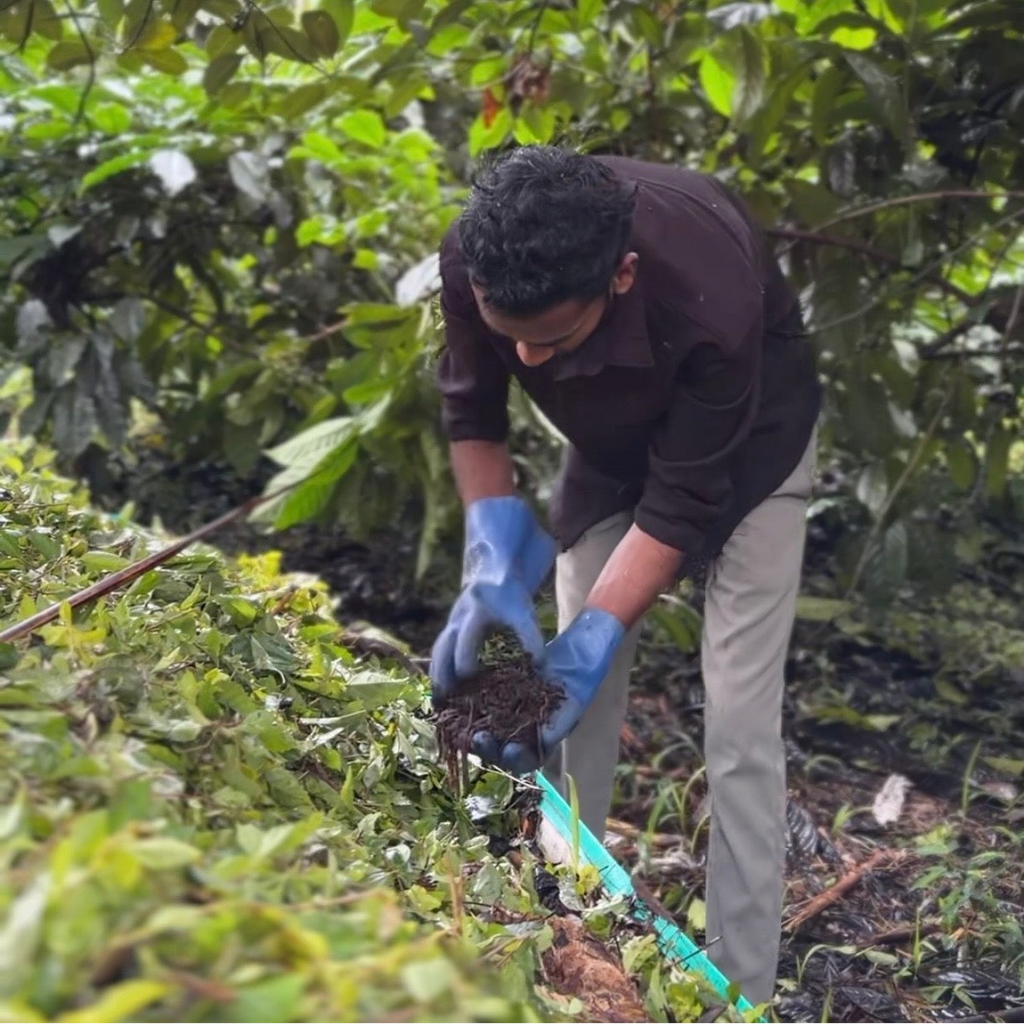
Over the past few weeks, we've been spending time at our vermicompost pits. It's one of those jobs that quietly supports everything else we do on the estate.
Around the estate, there's always organic matter to work with. Coffee pulp from processing, fallen leaves from our shade trees and other plant material are collected instead of being discarded. These go into our vermicompost pits, where earthworms gradually break them down into a rich, natural compost.
What comes out of the pit looks very different from what went in. The compost is dark, crumbly and full of nutrients and beneficial microorganisms. We apply it around our coffee plants, where it slowly becomes part of the soil again.
Healthy soil is something every farmer thinks about.
Coffee plants draw nutrients from the ground year after year. If we want them to remain healthy and productive, we have to care for the soil just as much as we care for the plants themselves. Vermicompost adds organic matter back into the land, improves soil structure and helps the soil retain moisture for longer. It also encourages earthworms and microorganisms that keep the soil active and healthy.
A healthy soil isn't just about nutrients. It's alive. The more life there is beneath the surface, the better the environment for coffee roots to grow, absorb water and access the nutrients they need.
You'll often hear the term regenerative farming these days. For us, it isn't a certification or a marketing phrase. It's about farming in a way that improves the land over time instead of simply taking from it.
That means recycling what the estate naturally produces, reducing waste wherever we can and returning organic matter back to the soil. They're small decisions, but over many seasons they can make a meaningful difference.
Will vermicomposting transform our harvest overnight? Probably not.
Coffee farming has a way of reminding you to be patient. Rainfall, temperature, pests and countless other factors influence every crop. Vermicomposting isn't a shortcut to higher yields, but healthier soil gives our coffee plants a stronger foundation. Over time, we hope that means healthier plants, more resilient harvests and more consistent yields.
Many of the things we do on the estate are investments in the future. Planting a new coffee seedling, raising pepper vines, pruning shade trees or building a vermicompost pit won't change tomorrow's harvest. They're decisions made for the seasons ahead.
That's what farming has always meant to us.
It's about caring for the land today, so it can continue to care for us tomorrow.
Related post

04
Aug
27
Jul